
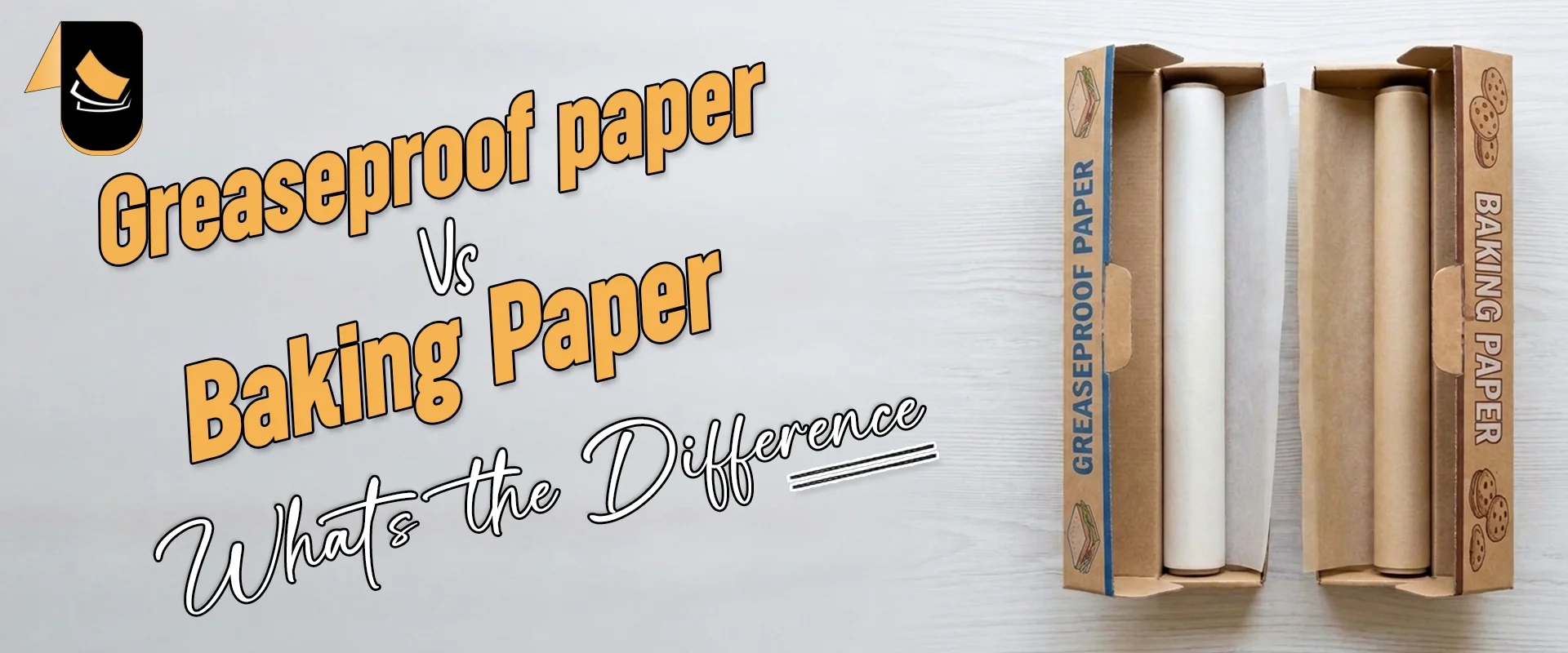
Greaseproof Paper Vs Baking Paper: What’s The Difference?
Many home bakers use custom greaseproof paper and baking paper, but they think that both papers are the same. This belief may lead to ruining their food because they don’t know the exact difference between the two papers. Both greaseproof paper and baking paper have different compositions and heat resistance. Baking and greaseproof paper differ in composition and heat resistance. So accidental selection of the wrong paper can cause smoking or burning in the oven. To avoid such an issue, read the blog:
Composition Of Greaseproof Paper And Baking Paper
Greaseproof paper is made by refining the wood pulp until its fibres become very dense. This paper contains wax that acts as a barrier against oil and grease. Due to the wax, it is not suitable for use at high heat. Greaseproof paper is used to wrap food like burgers and fried chicken.
Baking paper is made of a thin layer of silicone that prevents your food from sticking to the oven trays without using oil and grease. It is often called silicone oil paper or parchment paper. It is used for baking cookies or roasting veggies.
The composition difference between the two papers is:
| Features | Greaseproof paper | Baking paper |
| Surface coating | None | Silicon layer |
| Non- stick ability | Limited | Excellent |
| Heat tolerance | Moderate | High |
| Primary use | Wrapping & food prep | Baking & roasting |
The Functional Difference In Heat Resistance
Selecting the right paper for the oven is beneficial for both your baked item and kitchen safety. Both papers seem similar, but they function differently under oven heat. The core difference between the two papers is their heat resistance temperature.
Greaseproof paper
- does not have a silicone layer
- can handle only oven temperatures below 350°F
- temperature increases, the paper will become brittle, change color, or burn
Baking paper
- has a thin silicone coating
- Can handle oven temperatures up to 425°F or above
Baking paper is the best choice for baking cookies or cakes in the oven.
Non-Stick Properties And Role Of Density
The selection of paper must be done based on the type of food and the cooking process. This is because a paper’s nonstick properties and dexterity also affect its performance. Such as:
Nonstick property
Due to the silicone layer, it prevents moisture and fats from sticking to the paper. For baking paper, you don’t need to grease pans before baking any item. You can slice off without tearing the sheet if you are baking with heavy cheese dough.
Role of density
Greaseproof paper is very dense and heat-resistant. Its fibres are strongly beaten to make them dense and provide natural resistance against oil and grease.
- Density
- Limitation
- Performance
Greaseproof Paper And Baking Paper: A Cost-Benefit Analysis
Greaseproof paper is very cheap in price, but baking paper is very cost-effective. You should have to choose the paper keeping in mind their properties and what you are baking rather than just the cost of the paper. The safety of you and your food in the kitchen is more important than the cost.
Evaluating Value For Home Bakers
Professional home bakers always focus on the production of a perfect product for their customers. They usually use baking paper to avoid sticking the food to the pan and wasting their time and energy cleaning the mess. To provide good products to your customers, you need to choose effective paper to save time and energy.
Durability And Reusability Factors
Choosing greaseproof paper may not be the most durable and reusable option for your bakery. It can be used for wrapping food rather than to bake items with it. It has a sticky surface that may damage your food presentation and texture.
Baking paper has a silicone-resistant barrier. This paper is considered more durable and reusable for the long term due to its non-sticky surface. You can use this paper multiple times if the surface of the paper is clean.
Environmental considerations and sustainability
Baking paper is considered an eco-friendly option rather than greaseproof paper. Spending money on greaseproof paper may not be a sustainable option for the environment. Silicone-coated paper is a better choice for maintaining environmental impact.
Identifying Quality In Your Kitchen Supplies
Not all baking papers are the same. Both greaseproof paper and baking paper have different qualities in the market. You have to choose your paper wisely because it will affect your food taste also.
How To Find Genuine Baking Paper
The silicone-coated paper surface is smooth. It should not tear when folded. Always ensure that the paper remains as strong as when it is placed inside the oven.
Always Check Food Labels
Always check that the paper mentions the complete description of its making. Don’t rely only on the “non-stick” label; always ask for the complete description. If you feel the label on the product is unclear, then you don’t need to buy this paper. Reading the paper description carefully, it will help you to save your kitchen from any damage.
Brand Reputation Matters For Food Safety
Before purchasing paper, ensure that the brand has good reviews about their products and a good reputation in the market. Choosing the best brand means your paper is non-harmful and has proper safety measures.
Storing And Handling Practices For Your Papers
Keeping your greaseproof paper and baking paper in good condition is key to making them smooth and heat-resistant for the long term.
Maintaining the integrity of your paper supplies
To maintain the integrity of your papers, you need to take these steps:
- Store your paper in its original packaging
- Keep in a drawer
- Keep on pantry shelves
- Keep away from heavy-weight items
- Keep away from direct sunlight
Store properly to avoid moisture absorption
Paper products cannot bear humidity because it ruins their crispness. To store your paper products:
- Store in a cool space
- Store in a dry place
- Keep away from the heat or stove fire
- Keep away from the dishwasher or water
- Use a sealed plastic bag to avoid humidity
Tips for efficient cutting
To avoid any damage to the sheet. Always follow:
- Measure your baking sheet before cutting
- Use sharp cutters
- Use the fold-and-create method
Conclusion
Custom food wrapping paper has various features and similarities. Due to this people get consumed in different tulips due to the similar appearance and the same shoes for baking and grease. This blog fully explains how to distinguish between the two. Brands that are looking for either of the two options can choose the custom paper manufacturing service of Custom Grease Paper.
FAQs
What is the best food paper for an air fryer?
An air fryer has high temperatures, so you can use silicone-coated baking wrapping paper.
Why must I avoid wax paper for high-heat applications?
This is because wax is not heat-resistant and highly liable to catch fire. So when you use this paper for high-heat applications, you can encounter serious hazards.
Are parchment and baking paper the same?
Yes! They are the same paper type, just named differently in different areas.
Is it safe to reuse greaseproof paper?
No! Greaseproof paper absorbs oil that harbors bacteria. So reusing it can cause food contamination or a bad odour.